
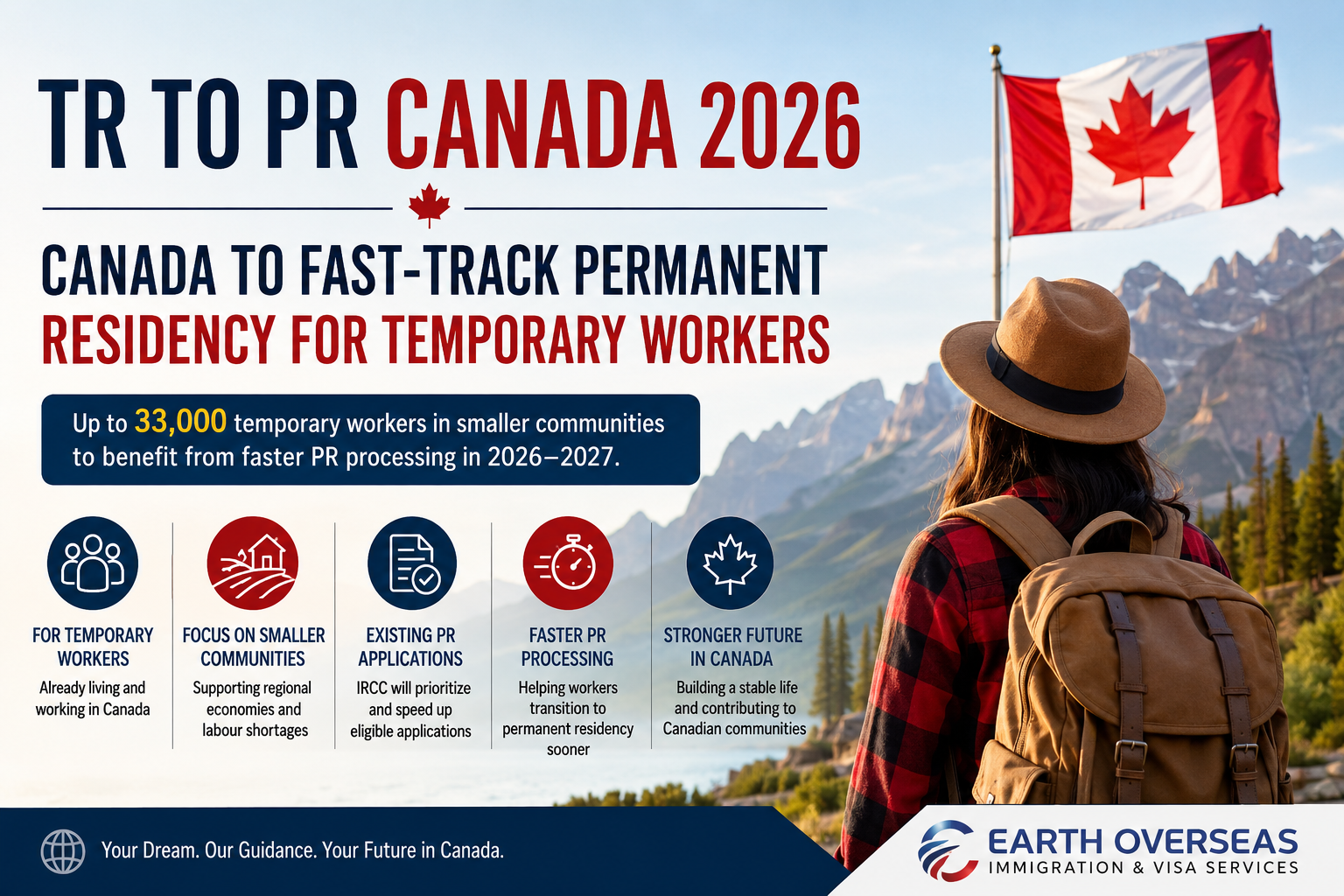
Canada is once again making major changes to its immigration system – and this time, the focus is on temporary workers already living and working in the country.
In a recent announcement, Immigration, Refugees and Citizenship Canada (IRCC) confirmed plans to accelerate permanent residency processing for up to 33,000 workers across Canada. The initiative is aimed primarily at workers living in smaller communities and rural areas where labour shortages continue to impact local economies. For many temporary residents, this could become one of the biggest TR to PR opportunities in recent years.
What Is Canada’s New TR to PR Initiative?
The federal government introduced a special measure designed to help eligible temporary foreign workers receive permanent residency faster.
However, unlike the previous pandemic-era TR to PR pathway, this is not a new public immigration stream where applicants submit fresh applications. Instead, IRCC plans to prioritize and accelerate existing permanent residence applications already in the system.
The initiative mainly supports workers who:
- already live in Canada,
- contribute to labour-shortage sectors,
- and have established themselves in regional or smaller communities. This move reflects Canada’s growing focus on retaining workers who already have Canadian work experience and community ties.
If you are exploring your immigration options through programs like Express Entry Canada or provincial pathways, this policy shift is important to understand.
Why Canada Is Prioritizing Smaller Communities
Canada continues to face serious labour shortages in industries such as:
- healthcare,
- caregiving,
- agriculture,
- transportation,
- hospitality,
- and skilled trades.
While major cities attract large numbers of newcomers every year, many smaller communities struggle to retain workers long term.
The government’s strategy is clear:
- strengthen regional economies,
- reduce labour shortages,
- and encourage immigrants to settle outside major urban centres.
Regional immigration programs have become increasingly important in Canada’s immigration system, and this latest TR to PR initiative further confirms that direction.
Applicants connected to regional pathways or provincial nomination programs may now see stronger long-term opportunities for permanent residency.
You can also learn more about provincial immigration options through the Ontario Immigrant Nominee Program (OINP) guide available on Earth Overseas Immigration.
Who May Benefit From This PR Acceleration Program?
Based on the government announcement, the initiative appears focused on temporary workers who:
- have already applied for permanent residence,
- live in smaller communities,
- and have at least two years of local work or community ties.
Programs likely connected to this initiative include:
- Provincial Nominee Program (PNP),
- Atlantic Immigration Program,
- caregiver pilots,
- Agri-Food Pilot,
- and regional immigration pilots.
Temporary workers already employed in essential sectors could benefit significantly from faster PR processing timelines.
Canada is increasingly rewarding applicants with:
- Canadian work experience,
- employer support,
- language ability,
- and long-term settlement potential.
This is also closely connected to the growing importance of category-based immigration selection in Canada’s economic immigration system.
Read more about Category-Based Selection in Canada Immigration and how it may affect future PR opportunities.
Is This the Return of the TR to PR Pathway?
Not exactly.
Many people are calling this a new “TR to PR pathway,” but technically it works differently from the temporary resident to permanent resident stream launched during COVID-19.
The earlier TR to PR program accepted new public applications.
This latest initiative focuses more on speeding up applications already under review.
That means eligible applicants generally do not need to submit a separate application under a new stream.
Still, for temporary workers already waiting for permanent residency approval, the impact could be substantial.
What This Means for International Students and Work Permit Holders
For PGWP holders and temporary foreign workers, this announcement sends a strong message about Canada’s immigration priorities in 2026.
Canada is increasingly favouring applicants who:
- already live in the country,
- have Canadian work experience,
- contribute to labour-demand occupations,
- and show long-term settlement potential.
This may influence future Express Entry draws, provincial nominations, and category-based selection rounds.
If you currently hold a work permit and plan to transition from temporary status to permanent residency, strengthening your profile through Canadian work experience and regional employment may become even more valuable moving forward.
You can also explore additional immigration updates and PR pathways on the Earth Overseas Immigration Blog.
Will Applicants in Major Cities Benefit Too?
Possibly — but the biggest advantages appear directed toward regional communities.
The federal government repeatedly emphasized smaller communities and rural labour shortages in its announcement.
Applicants living in areas outside Toronto, Vancouver, and Montreal may receive stronger prioritization under this initiative.
This aligns with Canada’s long-term immigration strategy to spread population growth more evenly across provinces and regions.
Final Thoughts
Canada’s latest immigration announcement could become one of the most important TR to PR developments for temporary workers already inside the country.
Although it is not a brand-new immigration stream, it clearly shows where Canadian immigration policy is heading:
- faster permanent residency processing,
- stronger regional immigration programs,
- and a greater preference for applicants with Canadian experience.
For temporary residents already contributing to Canada’s workforce, especially in smaller communities, this initiative could create a faster and more stable path toward permanent residency.
If you are planning your transition from temporary status to PR, consulting experienced professionals can help you understand which immigration pathways best fit your situation.
Explore more Canadian immigration pathways and updates at Earth Overseas Immigration & Visa Services.